3/2/2026 9:20:00 AM | Softball, Student-Athlete Development
Part I
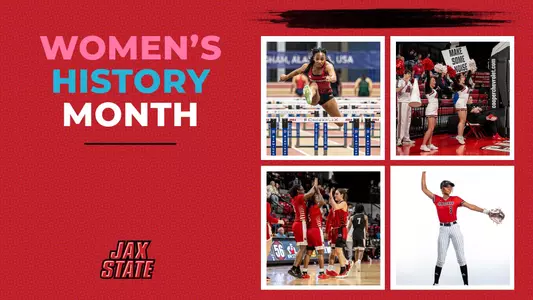
Women's History Month is celebrated every March in the United States and in several other countries around the world. It honors the contributions, achievements, and impact of women throughout history in culture, science, education, and more. Women's History Month began as Women's History Week in 1980 by President Jimmy Carter. In 1987 it was expanded to a full month after advocacy by the National Women's History Alliance. The month of March was chosen to align with International Women's Day on March 8. Women's History Month is important because it recognizes achievements often overlooked in traditional history, it highlights progress toward gender equality, and it inspires future generations. This month Jax State Athletics highlight women in sports as they share their narratives.
Name: Julie Boland
Sport: Head Softball Coach
What inspired you to become a coach, and who were your role models along the way?
I've always loved sports. Growing up between two brothers, we were constantly outside competing, playing, and pushing each other. But as I got older, it wasn't just the competition that captured my heart; it was the team's dynamic. I fell in love with the shared joy of wins, the sting of losses, the long bus trips, and the understanding that we were all going through an ever-changing journey together. There's something powerful about a group of people committing to something bigger than themselves.
By middle school, I knew I wanted to coach a team sport. At first, I thought I wanted to coach middle school. Then in high school, I wanted to coach high school. And the first time I stepped into Division I athletics, I knew instantly that is where I'm meant to be. I wanted to lead at the highest level and help shape young women through sport the way I had been shaped.
The biggest role model in my life has been my coach, mentor, and longtime friend, Jana McGinnis. She shaped not only my career but my life. She taught me, and all of us, about resilience, accountability, and character through her own experiences and through the game. She held me to a higher standard as a player, and later as a coach. I am better because of her leadership, her belief in me, and the example she set.
Can you share a defining moment in your career that shaped your coaching philosophy?
One defining moment that shaped my coaching philosophy happened early in my career when I was a graduate assistant. Some of my close friends who were still playing made decisions that violated the standards of our program. I was torn. These were people I cared deeply about, and I knew bringing it forward could affect those relationships.
I remember sitting in my office crying because I felt so conflicted. I didn't want to hurt my friends, but I also knew the standards of the program mattered. After wrestling with it, I brought the situation to our head coach.
I'll never forget her response. She told me, "You're going to make a great coach because you took yourself out of the equation and thought about what was best for the team, not what was easiest or most comfortable for you."
That moment changed me. It taught me that leadership isn't about protecting relationships or avoiding hard conversations. It's about protecting the culture. It's about holding the standard, even when it's uncomfortable. From that point on, I understood the bigger picture. That coaching requires courage, integrity, and the willingness to make decisions for the good of the team, not for personal convenience.
That experience helped shape my coaching philosophy. Standards matter, culture matters, and doing what's right must outweigh doing what's easy.
How has coaching changed your perspective of women in sports?
Coaching has absolutely changed my perspective in women's sports. It has shown me the incredible strength that exists in women's athletics. Women's programs are often in the background despite the level of commitment, talent, and performance being just as high. They play with resilience and passion that isn't dependent on headlines or external validation. Coaching women has reinforced my belief that women's sports are powerful and deserving because they play for something deeper. They play for the love of the game, and for each other. And they play with resilience and passion. Standing on the coaching side reminds me that it is my responsibility to help grow them as women and grow the sport for future women.
What advice would you give women aspiring to pursue a career in coaching or athletics?
My advice to women who aspire to pursue coaching and athletics is this; don't wait until you feel completely ready. Step into the room, speak up, and apply for the job and lead. Coaching requires courage. Find mentors who challenge you and believe in you. Women supporting women is powerful and necessary. Most importantly, remember the love of the sport. This profession is one of the most rewarding and fun jobs you'll ever have.
What does Women's History month mean to you personally?
Women's History Month is deeply personal to me because it represents the women who paved the way for me and the responsibility, I now have to do the same for others. Sports shaped so much of who I am. Growing up competing on different teams at different levels, learning team dynamics, experiencing wins and losses, all of it built confidence, resilience, and belonging in my life. I was extremely fortunate to be mentored by strong women who showed me what leadership with integrity and high standards truly looks like. Women's History Month reminds me that it's my turn to protect that experience for others and to fight for it to be valued the way it should be. It's about paying it forward. It's about ensuring that the next generation of women in sports not only have opportunities, but have mentors who believe in them, challenge them, and advocate for them. For me, Women's History Month is about being grateful and bearing the responsibility to honor the next generation with the same strength and purpose.
Name: Julie Boland
Sport: Head Softball Coach
What inspired you to become a coach, and who were your role models along the way?
I've always loved sports. Growing up between two brothers, we were constantly outside competing, playing, and pushing each other. But as I got older, it wasn't just the competition that captured my heart; it was the team's dynamic. I fell in love with the shared joy of wins, the sting of losses, the long bus trips, and the understanding that we were all going through an ever-changing journey together. There's something powerful about a group of people committing to something bigger than themselves.
By middle school, I knew I wanted to coach a team sport. At first, I thought I wanted to coach middle school. Then in high school, I wanted to coach high school. And the first time I stepped into Division I athletics, I knew instantly that is where I'm meant to be. I wanted to lead at the highest level and help shape young women through sport the way I had been shaped.
The biggest role model in my life has been my coach, mentor, and longtime friend, Jana McGinnis. She shaped not only my career but my life. She taught me, and all of us, about resilience, accountability, and character through her own experiences and through the game. She held me to a higher standard as a player, and later as a coach. I am better because of her leadership, her belief in me, and the example she set.
Can you share a defining moment in your career that shaped your coaching philosophy?
One defining moment that shaped my coaching philosophy happened early in my career when I was a graduate assistant. Some of my close friends who were still playing made decisions that violated the standards of our program. I was torn. These were people I cared deeply about, and I knew bringing it forward could affect those relationships.
I remember sitting in my office crying because I felt so conflicted. I didn't want to hurt my friends, but I also knew the standards of the program mattered. After wrestling with it, I brought the situation to our head coach.
I'll never forget her response. She told me, "You're going to make a great coach because you took yourself out of the equation and thought about what was best for the team, not what was easiest or most comfortable for you."
That moment changed me. It taught me that leadership isn't about protecting relationships or avoiding hard conversations. It's about protecting the culture. It's about holding the standard, even when it's uncomfortable. From that point on, I understood the bigger picture. That coaching requires courage, integrity, and the willingness to make decisions for the good of the team, not for personal convenience.
That experience helped shape my coaching philosophy. Standards matter, culture matters, and doing what's right must outweigh doing what's easy.
How has coaching changed your perspective of women in sports?
Coaching has absolutely changed my perspective in women's sports. It has shown me the incredible strength that exists in women's athletics. Women's programs are often in the background despite the level of commitment, talent, and performance being just as high. They play with resilience and passion that isn't dependent on headlines or external validation. Coaching women has reinforced my belief that women's sports are powerful and deserving because they play for something deeper. They play for the love of the game, and for each other. And they play with resilience and passion. Standing on the coaching side reminds me that it is my responsibility to help grow them as women and grow the sport for future women.
What advice would you give women aspiring to pursue a career in coaching or athletics?
My advice to women who aspire to pursue coaching and athletics is this; don't wait until you feel completely ready. Step into the room, speak up, and apply for the job and lead. Coaching requires courage. Find mentors who challenge you and believe in you. Women supporting women is powerful and necessary. Most importantly, remember the love of the sport. This profession is one of the most rewarding and fun jobs you'll ever have.
What does Women's History month mean to you personally?
Women's History Month is deeply personal to me because it represents the women who paved the way for me and the responsibility, I now have to do the same for others. Sports shaped so much of who I am. Growing up competing on different teams at different levels, learning team dynamics, experiencing wins and losses, all of it built confidence, resilience, and belonging in my life. I was extremely fortunate to be mentored by strong women who showed me what leadership with integrity and high standards truly looks like. Women's History Month reminds me that it's my turn to protect that experience for others and to fight for it to be valued the way it should be. It's about paying it forward. It's about ensuring that the next generation of women in sports not only have opportunities, but have mentors who believe in them, challenge them, and advocate for them. For me, Women's History Month is about being grateful and bearing the responsibility to honor the next generation with the same strength and purpose.
Saturday, March 14
Saturday, March 14
Wednesday, March 11
Thursday, February 19